September 18, 2026
When the migration actually crosses the Mara
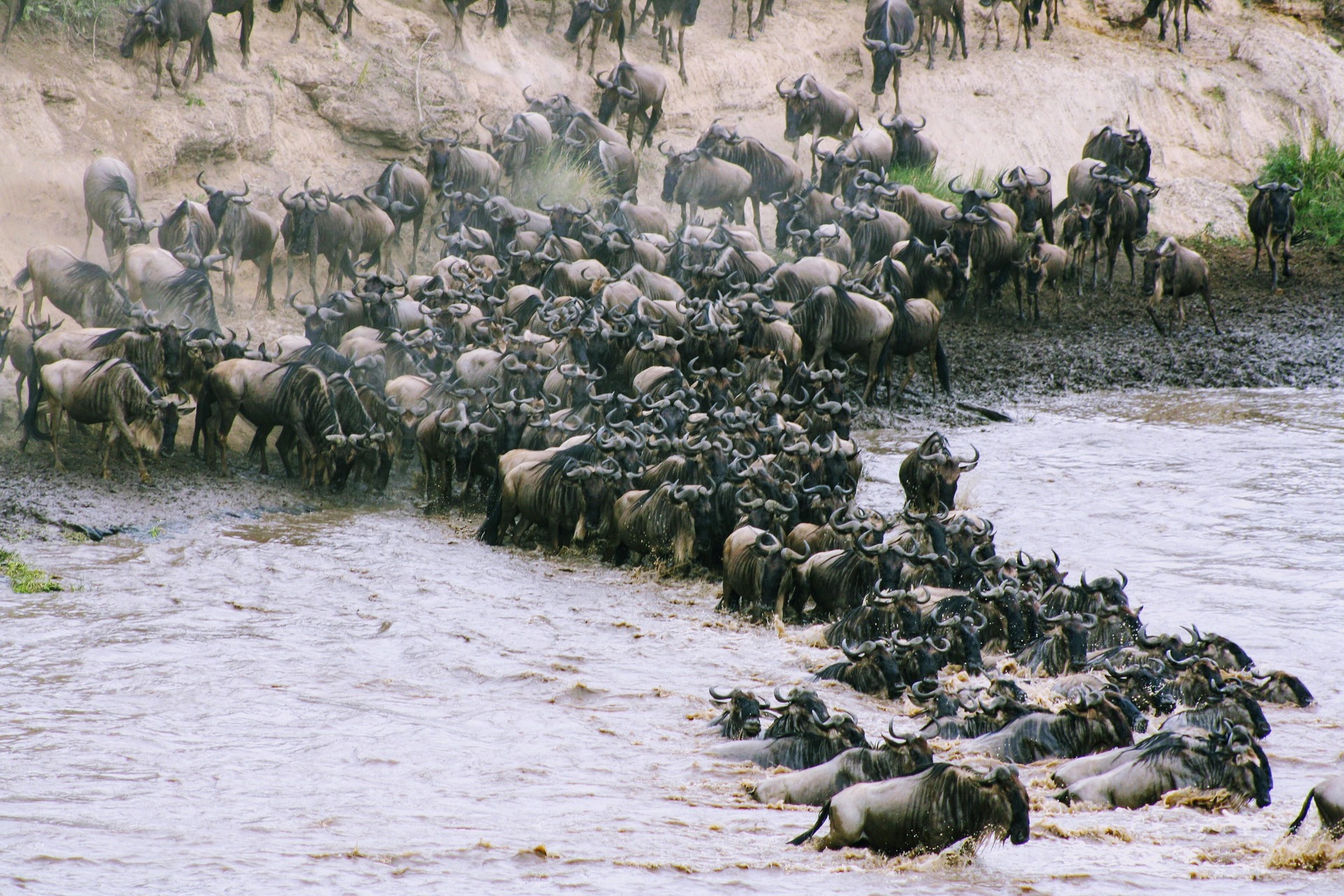
The question we are asked more than any other is some version of: if I come in August, will I see the crossing? The honest answer has two halves. The herds are almost certainly in the Mara in August. Whether they cross a river while you are parked on the bank is a different question, and anyone who promises it is selling you something.
What actually happens, and when
The wildebeest do not arrive in the Masai Mara in one dramatic wave. They drift north out of the Serengeti from around late July, and the front of the herd reaches Kenya well before the back of it does. Once here, they move around the reserve for weeks, following rain and grass rather than a timetable.
They cross three rivers coming into Kenya: the Sand River first, then the Talek, then the Mara. Only the Mara River gives you the scene from the documentaries, with the steep banks, the crush of animals and the crocodiles waiting. The other two are crossed with far less drama and far fewer vehicles watching.
The window, in plain terms
- Late July — the first herds enter the reserve from the south.
- August — the most reliable month. Crossings can happen more than once in a day.
- Late August to early September — the peak most guides point to; for 2026 the strongest window runs roughly 22 August to 7 September.
- September into October — herds are still here, crossings continue, and the reserve is quieter than in August.
- November onwards — the herds head back south, and the Mara returns to its resident wildlife.
If you are set on a crossing, come between mid-August and late September, and give yourself at least three nights in the reserve. One night is one morning drive and one afternoon drive. Three nights means six chances, plus the flexibility to sit at a build-up on the bank for two hours instead of moving on because you have a road transfer to make.
What if you cannot travel in August?
Then come anyway, and plan for the resident wildlife rather than the herds. The Mara’s lion prides, cheetah and leopard live there year round, and so do elephant, buffalo, giraffe and hippo. The reserve in February is green, quiet and far cheaper, and the photography is arguably better without the dust.
The other half of the story sits south of the border. The calving season runs through January and February on the short-grass plains of the southern Serengeti, when something close to half a million calves are born in a matter of weeks. Predator action is intense and the crowds are a fraction of Mara August.
Where a crossing actually happens
Crossing points shift year to year with the river level and where the banks have collapsed. Your driver-guide works this out on the day, on the radio, reading where the herds are building and which way they are facing. This is the single strongest argument for a guide who works the Mara regularly rather than a vehicle that arrives from Nairobi and hopes.
Be ready for the other reality of a crossing: you may sit for three hours watching thousands of animals think about it, and then watch them turn around and walk away. That is not a failed morning. It is what the migration is.
Trips that put you in the right place
If the migration is the reason you are coming, these are the itineraries we would point you at:
- 3-Day Masai Mara Safari — the shortest trip with a genuine chance, two nights in camp.
- 4-Day Masai Mara & Lake Nakuru — more time in the reserve, with Nakuru’s flamingos on the way back.
- 8-Day Samburu, Ol Pejeta, Nakuru & Masai Mara — three nights in the Mara at the end, after the north.
Tell us your dates and we will tell you honestly what they are likely to give you, including when the answer is “come three weeks later if you can”.